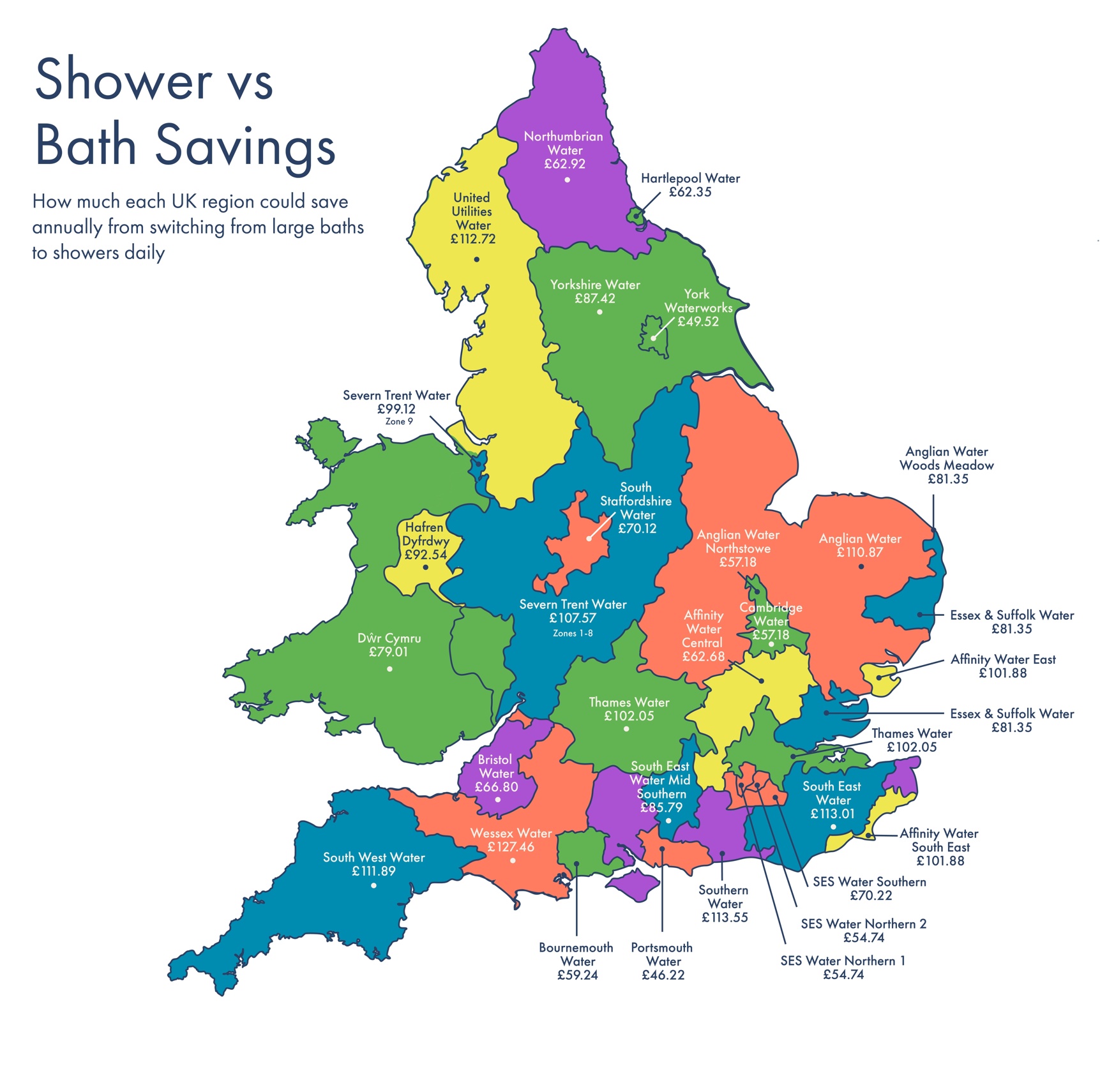
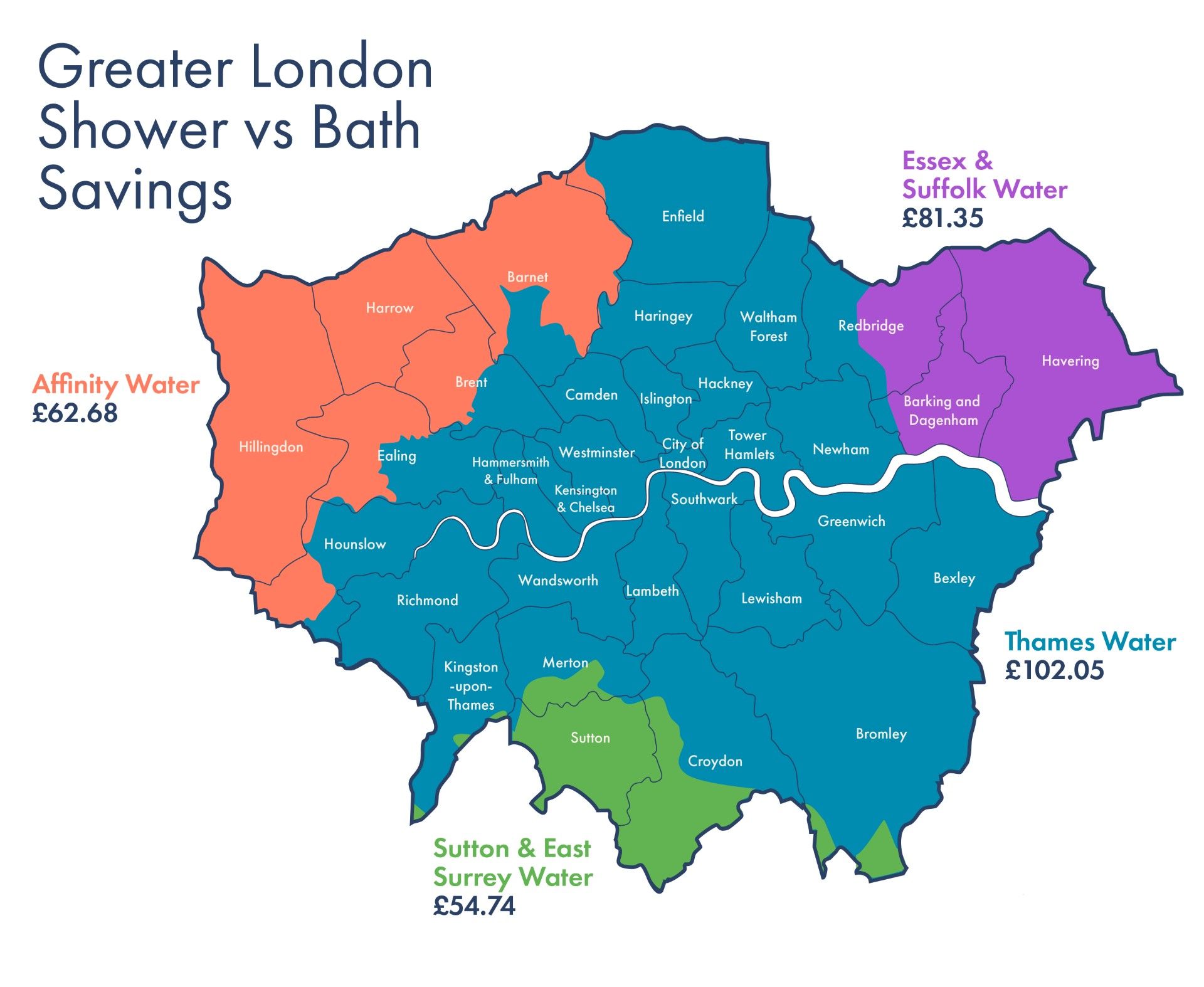
However, it is a geographical lottery when it comes to the amount of savings that can be made depending on the water company each home is served by. Those charged the cheapest rates could make savings of up to £46.22, while those on the highest rates could save over £127.
And those amounts are set to rise further still with a raft of price increases already announced for later this year from water companies.
These figures were calculated by comparing the standard metered rate for each water company from the current 2025/26 year, and multiplying this by the water usage of small and large bathtubs with half-filled capacities, as well as the typical usage and duration of showers.
For a small bathtub with a capacity of around 160 litres that is half-filled and using only 80 litres, the cost would be around £60.31 per person annually, while larger ones of 360 litres in capacity – or 180 litres when half-filled – would cost £135.70.
Meanwhile, showering would cost around £75.57 per person each year based on an average shower using 10 litres of water per minute, combined with the average time people spend in the shower of 6.7 minutes researched by experts at the Universities of Surrey and Swansea.
However, the amount of money that can be saved by switching to showers can vary based on how much the shower uses per minute, coupled with the amount of time people spend in the shower. Some companies also offer special alternative rates for customers, which may affect the overall saving.
Wessex Water customers, which includes areas of Wiltshire, Dorset and Somerset, face the highest water charges in the UK, paying an astonishing 309.02p per 1,000 litres. This rate is more than £1 above the national average highlighted in the study and 34p pricier than Southern Water, the next most expensive region.
Individuals in the regions served by Wessex Water could save up to £127.46 annually by swapping from large baths to showers, and an additional £14.66 by switching from small baths.
The savings in the top 5 regions per person annually from switching are:
- Wessex Water - £127.46 versus large baths, £14.66 versus small baths
- Southern Water - £113.55 versus large baths, £13.06 versus small baths
- South East Water (Sussex, Mid Kent, West Kent areas) - £113.01 versus larger baths, £13.00 versus small baths
- United Utilities - £112.72 versus large baths, £12.97 versus small baths
- South West Water - £111.89 versus large baths, £13.06 versus small baths
Those served by Portsmouth Water, who have the lowest rate of just 112.05 per 1000 litres in comparison, can also make savings of between £5.32 and £46.22 per person per year.
Tips for those maximising savings from showering include:
- Keep time spent in the shower short as possible
- Never allow a shower to run for a period of time before getting in
- Look at investing in smaller shower heads to reduce the amount of water usage
This information comes as a survey conducted by Sanctuary Bathrooms into showering vs bathing habits found that many Brits are already ditching the bathtub, with 15 million individuals aged 18 and above, or 28% of those polled, having already made the switch from baths to showers.
That is on top of 3 in 5 (59%) stating that they have always preferred showering to bathing.
James Roberts, Director of Sanctuary Bathrooms, said of the findings: “With the cost of living constantly on people’s minds at the moment, switching from baths to showers – even partially – could help those on water meters save extra money throughout the year.
“The savings could be even more significant for those with larger households, particularly in those areas that are charged more for water usage.
“Those already using the shower more can also save money by keeping showers short, not leaving water running, and also changing to showers that use a lower amount of water per minute.”
-ENDS-

 Contact PR team
 Visit press office