How Do I Join the Panelling and Brick Slips?
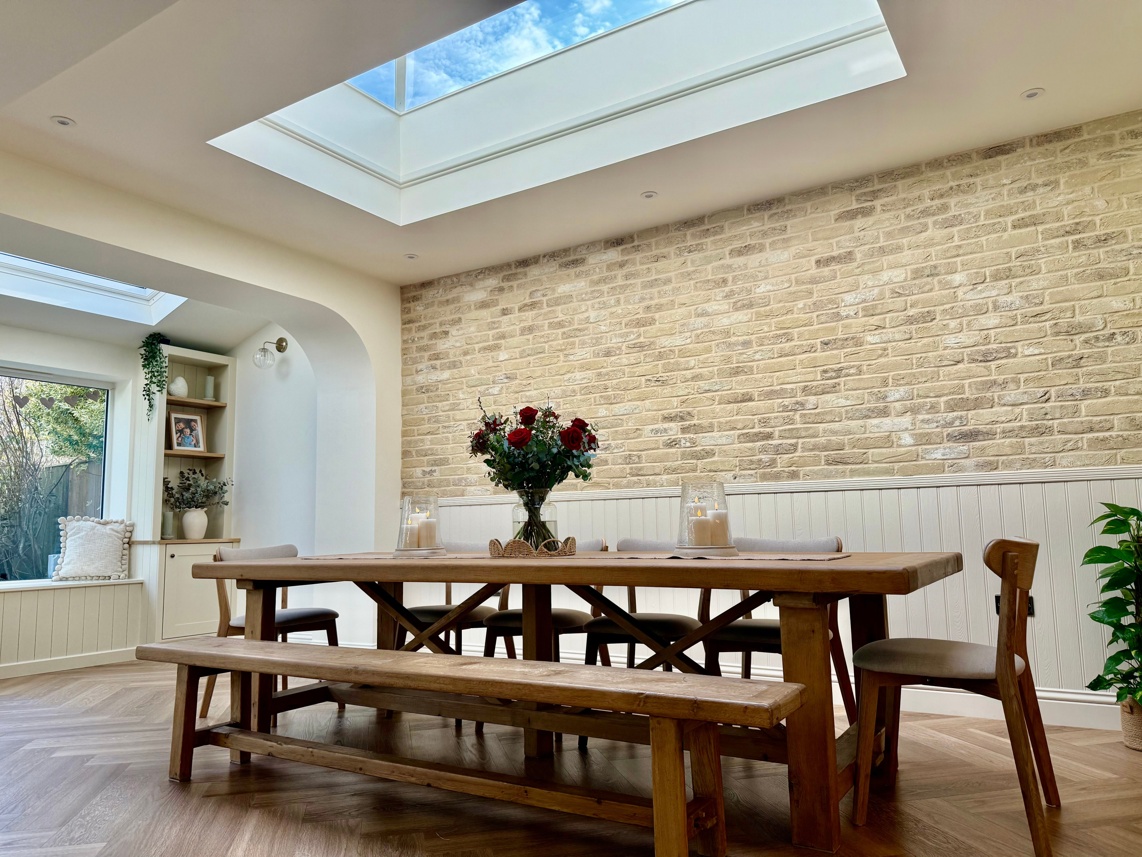
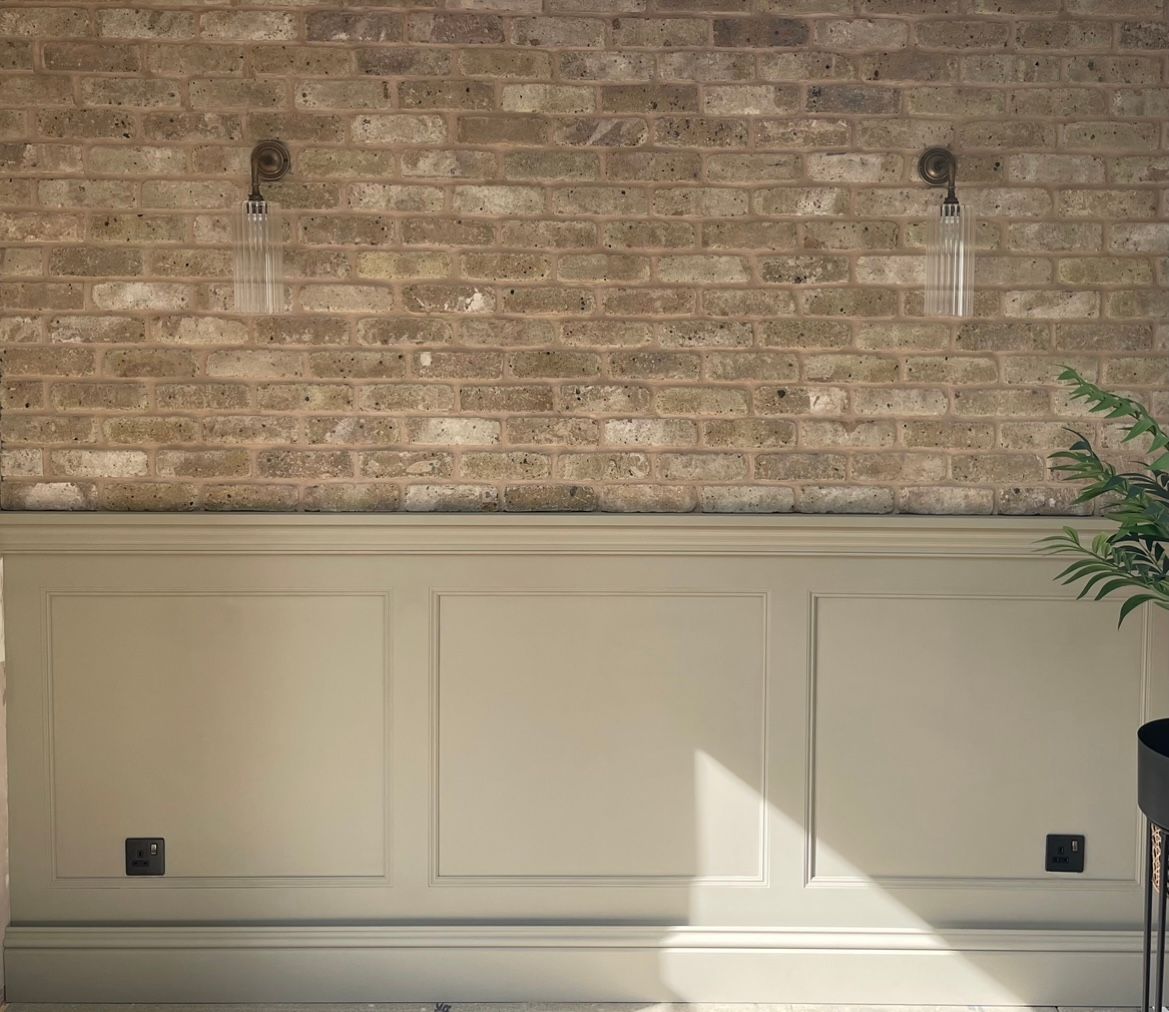
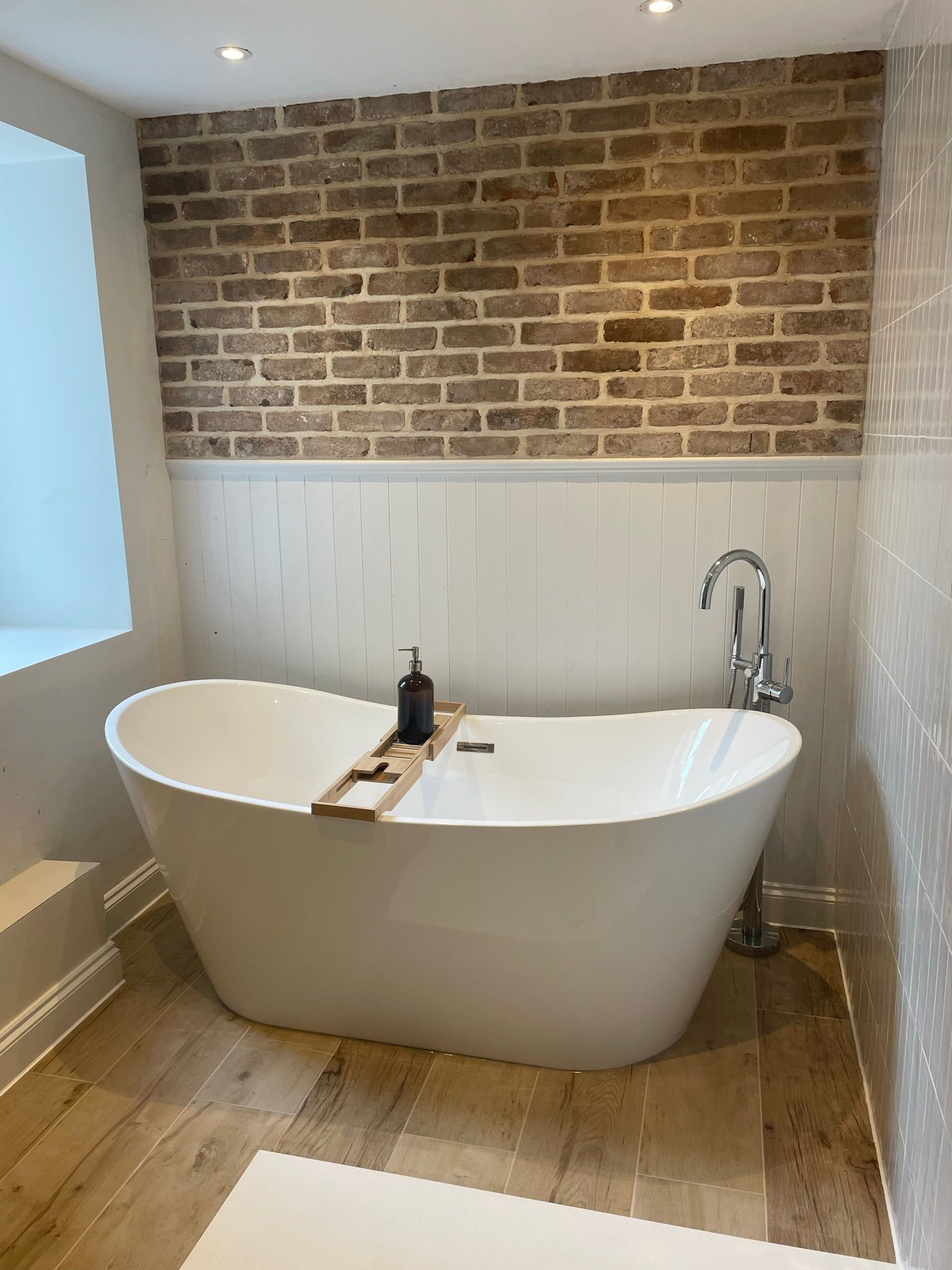
With most wooden cladding, you'll be finishing with a capping or decorative edging, that allows for a nice transition.
The key things to consider are the thickness of the materials, and the size and material that physically joins them.
Brick slips are 22mm thick, and including the adhesive will come out to around 25mm. Therefore, you want your cladding, potentially, but certainly your edging to come out that far at the very least. Maintaining a look of full brickwork means the cladding would be on top of the bricks so if they can come out a little further, that will give the perfect impression.
You should get the course or edges of the brick slips as close as possible to the panelling. Due to the irregular shaping of the slips, particularly in the reclaimed collection, there will always be small gaps. Once everything is installed, you have a couple of choices- either use a very thin mortar line to cover these tiny gaps - keeping in style with the brickwork, or better, use a thin line of caulk that is either similar in colour to the cladding, paintable to that colour, or otherwise a nice contrasting colour to use it as a feature.
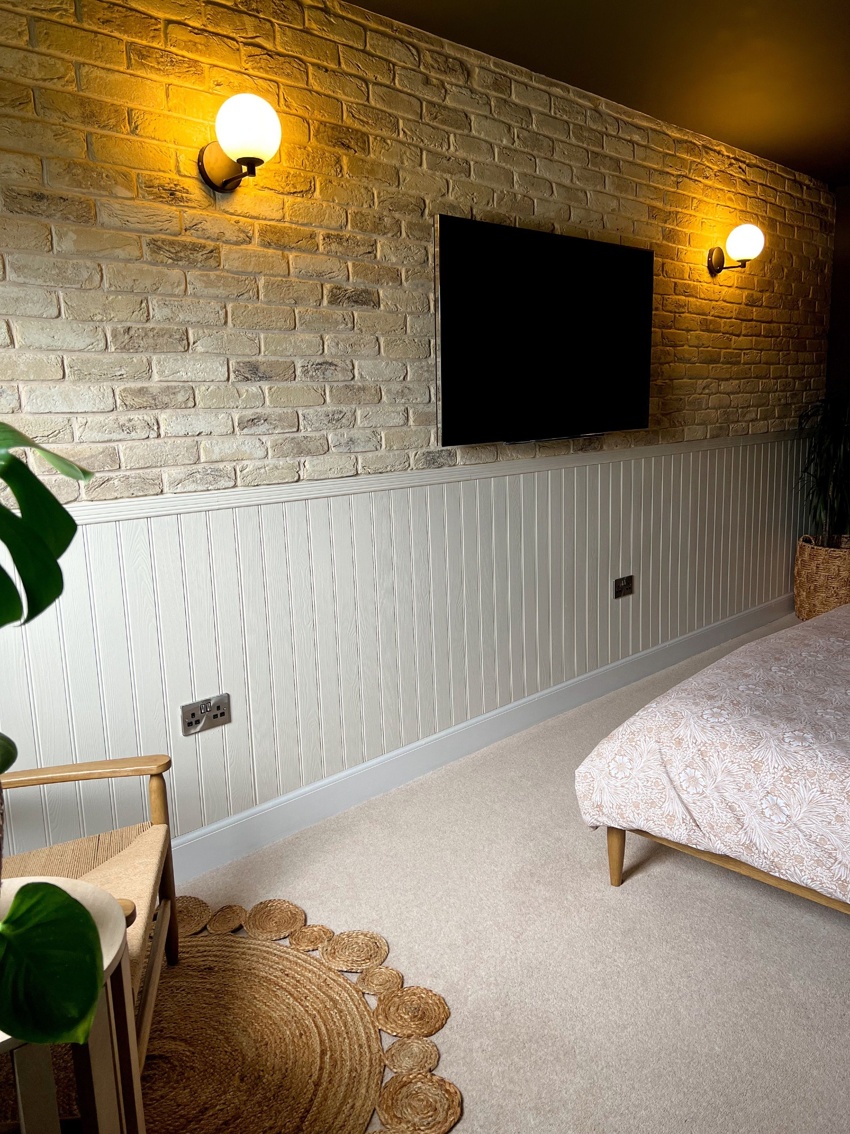
The ideal way to join the two materials would be to overlap them. If you can add part of the cladding edging infront of the last row or edges of the slips then it will give a perfect look of pre-existing brickwork.
What Colours Should I Put Together?
It depends on what style you're looking to achieve. Ultimately brick is an organic material, and as such the colourings go with most things.
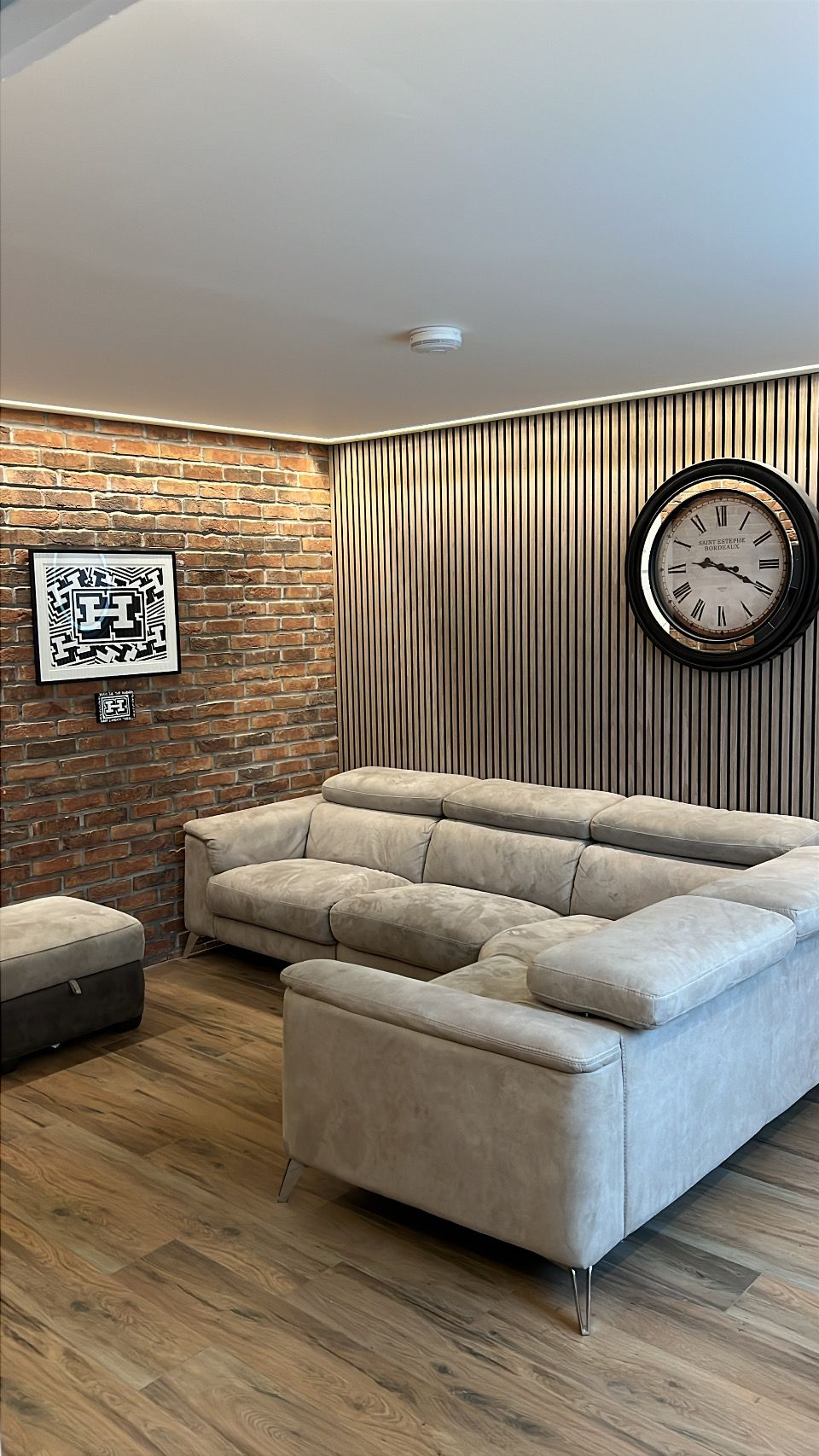
You can look to blend in pastel colours with lighter blends, or give some contrast with deep browns or reds.
If you're creating two textures together, they can either blend, or contrast!
Can I Use Them Externally?
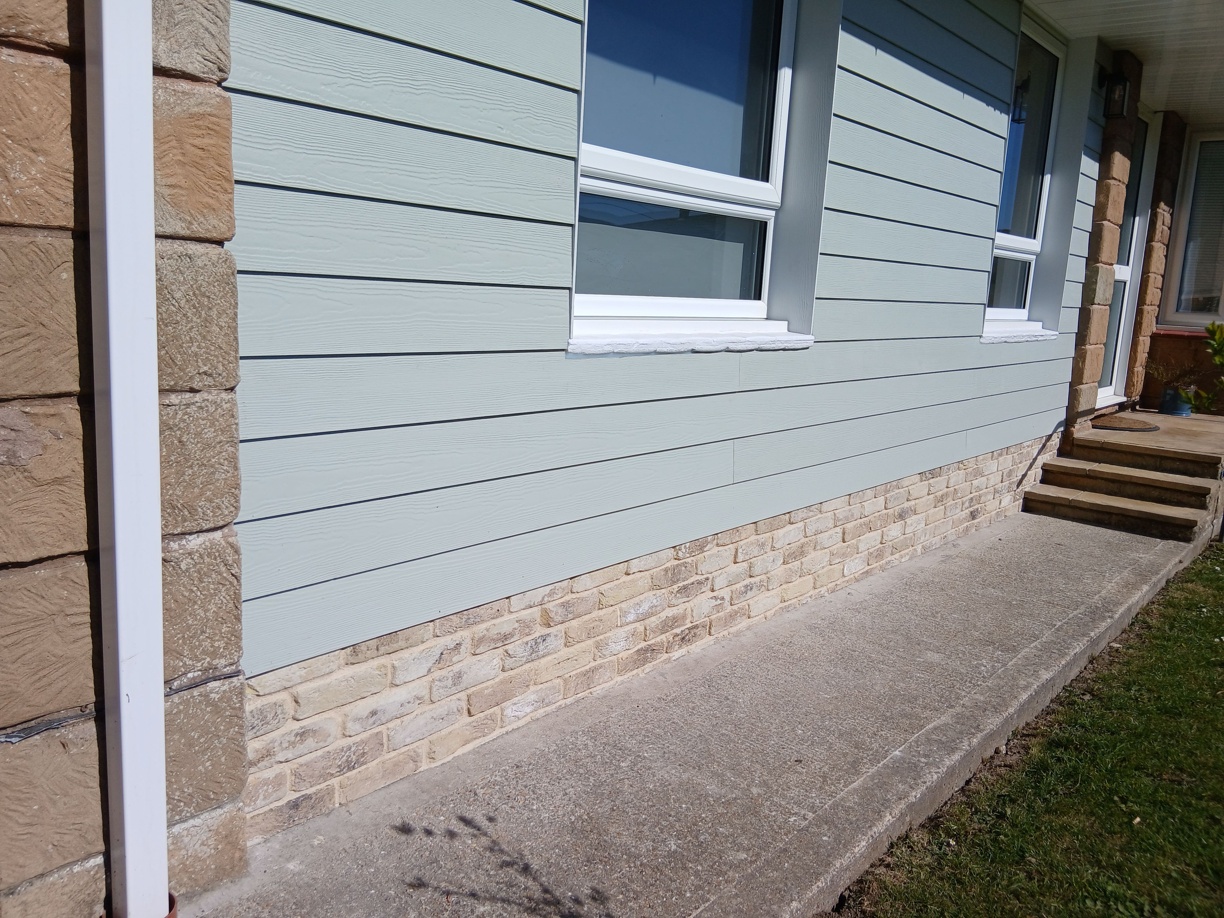
Bricks are made for outdoor use, so there is no issue in using brick slips externally. You will however, need to ensure the wood you use is treated for external use.
Where most often inside the panelling goes on top, externally it's usually the brickwork from the ground up. Historical designs include structural timber beams, and this can be used aesthetically to great effect, essentially boxing in areas of brickwork.

 Contact PR team
 Visit press office