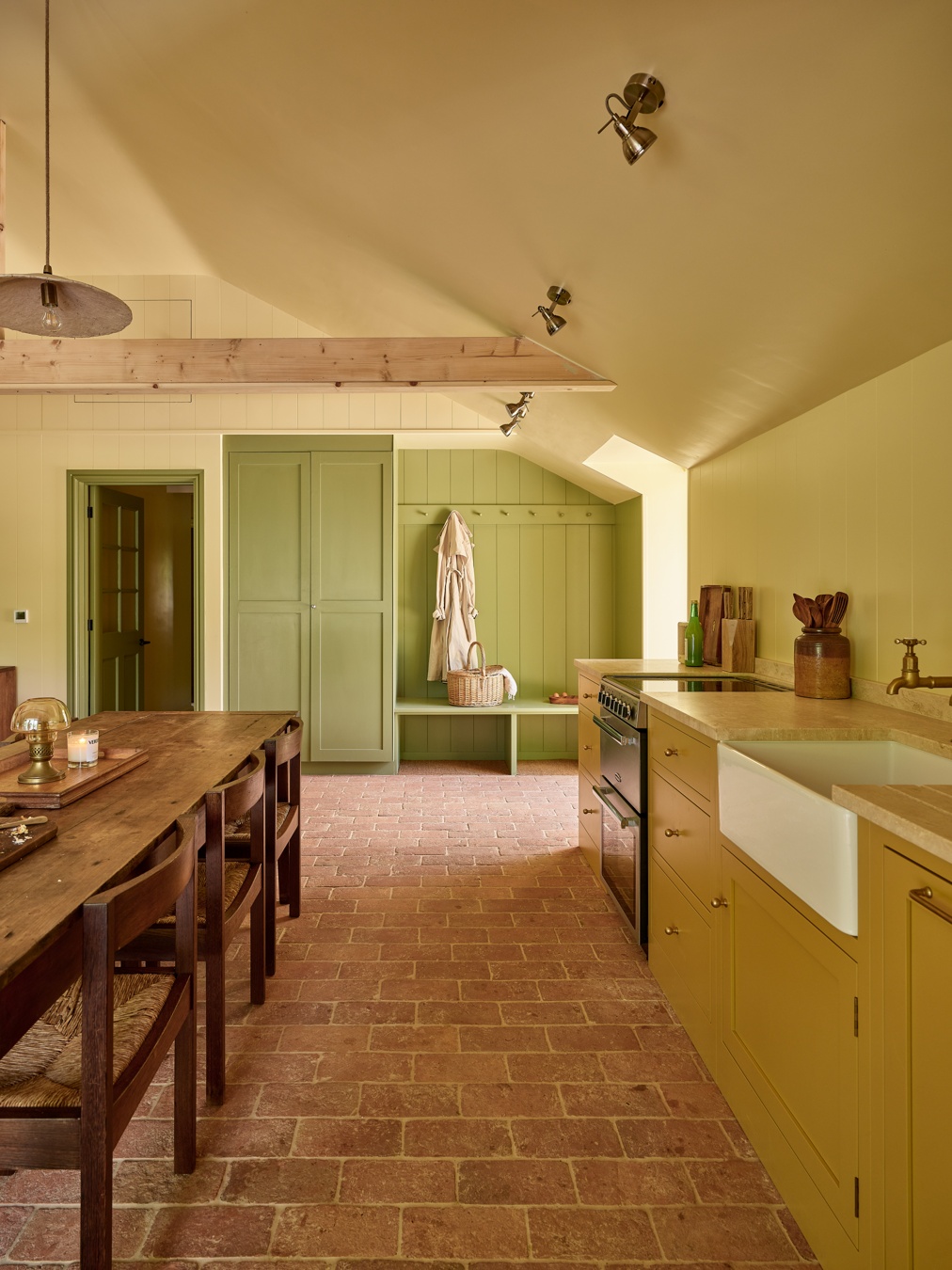
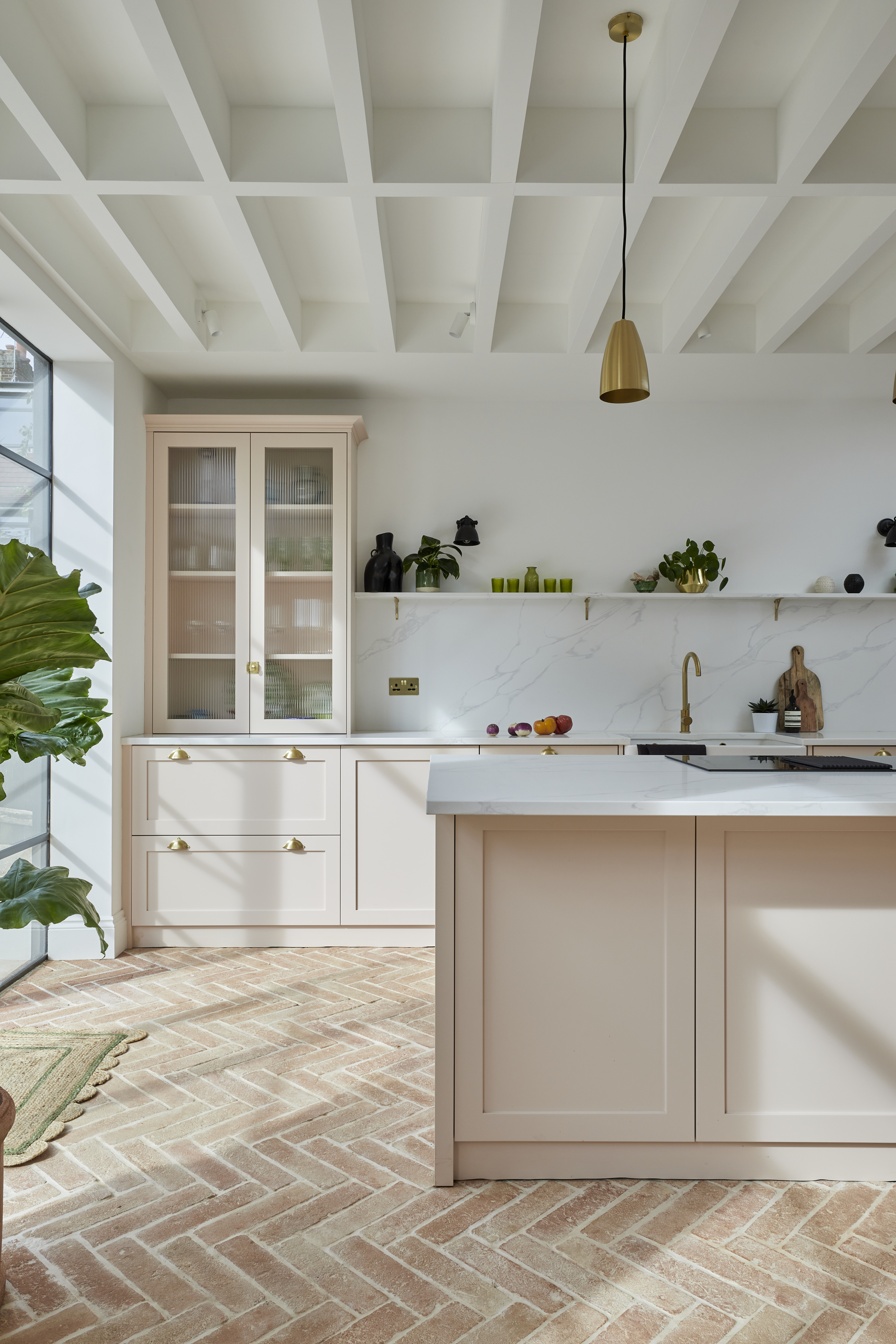
“Tiles are where terracotta becomes much more than a colour choice, because you start to think about placement and format as much as tone. In a kitchen, using terracotta across the entire floor creates a continuous warmth that softens cabinetry and joinery, whereas introducing it in smaller sections, such as a splashback or behind a range, allows it to act more as a focal point within the scheme.
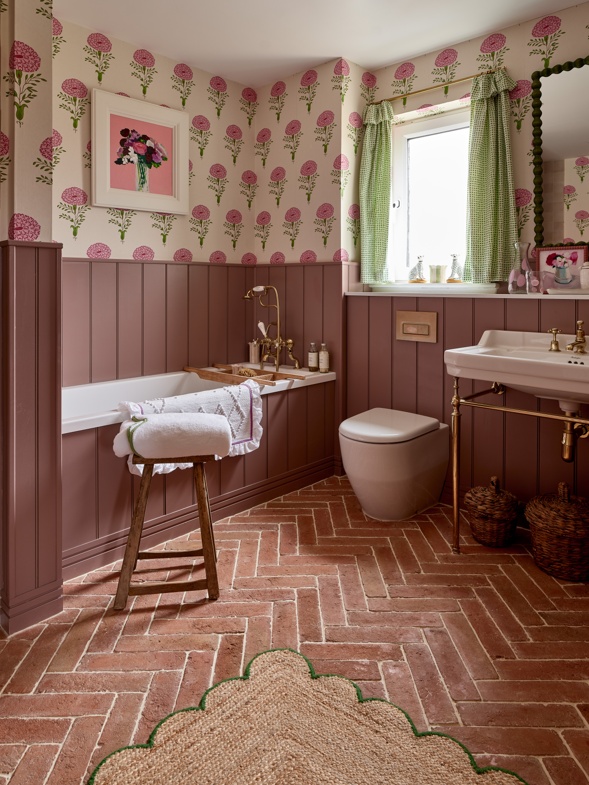
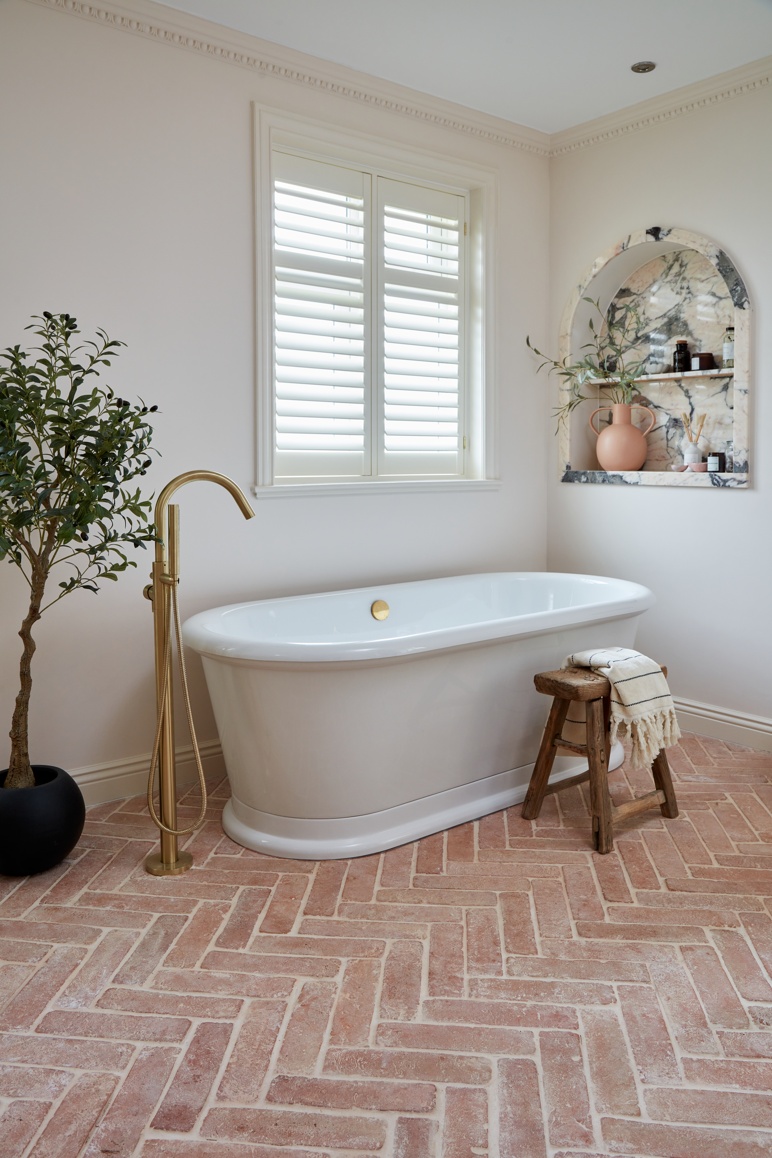
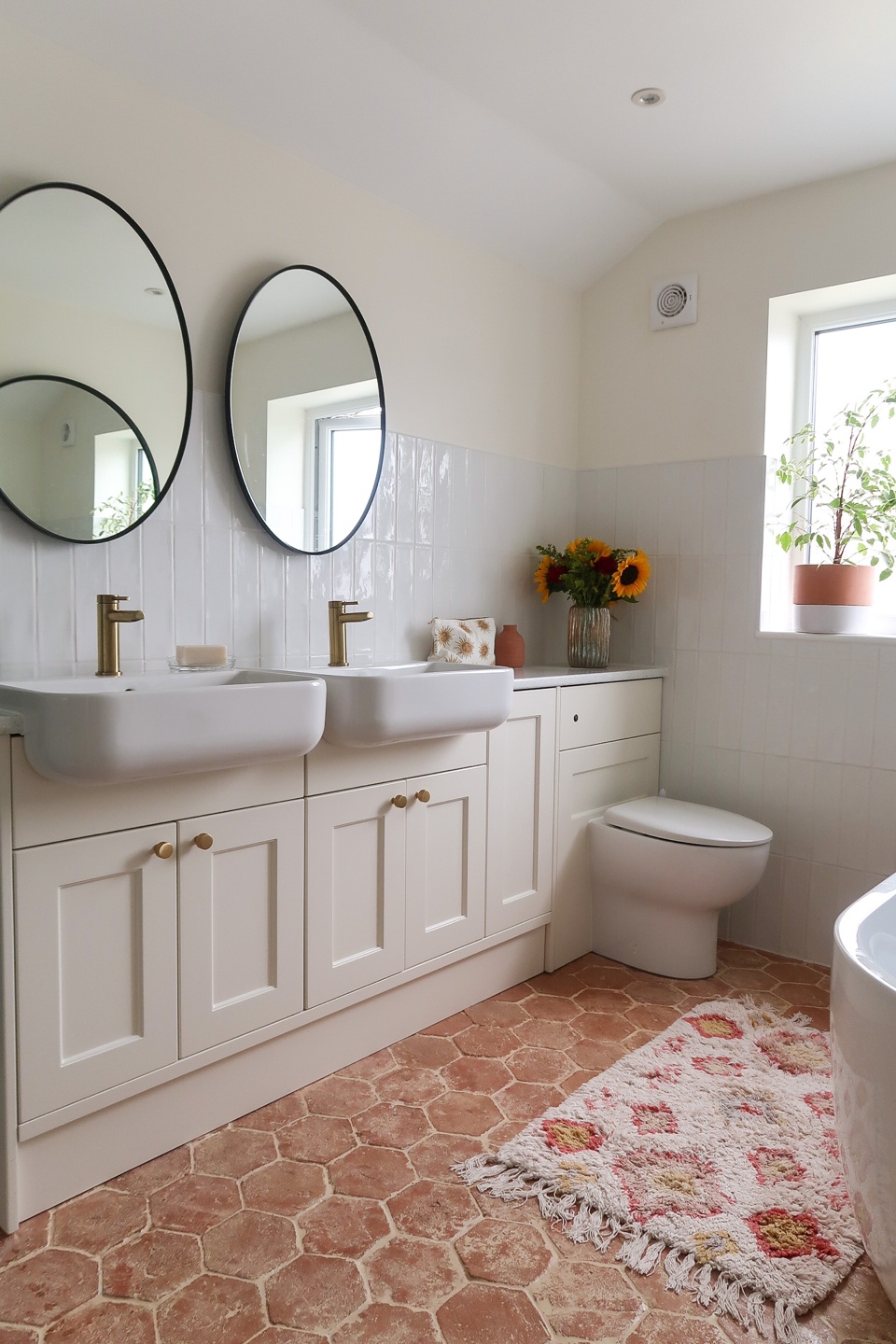
“In bathrooms, it is often about how far you take it. Full-height application can create something quite immersive and cocooning, particularly in a shower space, while a half-height treatment or a more broken layout keeps the look lighter and more relaxed. The format plays a big part in that as well, with larger tiles giving a cleaner, more architectural feel, and smaller or more irregular pieces bringing in variation and a slightly more decorative edge,” adds Grazzie.
And then there is the shift from terracotta as a material to terracotta as a colour, which opens up an entirely new direction. When you take that familiar tone and reinterpret it through glazed or porcelain tiles, it becomes more playful, more decorative, and far more adaptable. Designs such as Menara Cotto Star show how this colour can be woven into pattern and geometry, where the warmth of terracotta is lifted and layered through intricate star motifs, softened with chalkier neutrals, and given a crispness that natural clay alone cannot achieve.
“Choosing terracotta in this way gives you a different kind of freedom. You are no longer relying on the rawness of the material to carry the look, instead you are working with colour as something that can be shaped, repeated, and refined across a surface. It can feel graphic and sharp when paired with clean lines, or gently timeworn when set against softer finishes, always holding onto that underlying warmth. In a kitchen, this might play out as a patterned splashback that brings energy without overwhelming cabinetry, or a floor that feels layered and expressive rather than rustic. In a bathroom, it allows terracotta to take on a lighter, more decorative role, catching the light across glazed surfaces and adding detail in a way that feels both practical and quietly indulgent.”


 Contact PR team
 Visit press office